Thanks for dropping by Safe Investing South Africa. I am on a journey to build wealth my way. For any questions or comments, feel free to contact me.

9 Dec 2014

STOKVELS AND MONEY CLUBS

Ever since the formal financial institutions realised the power of stokvels and money clubs in South Africa, they have been doing all they can to tap into this market. Apparently these clubs are worth over R20 billion. We can be sure of one thing, whatever the banking sector is doing to get their hands in the stokvel industry will benefit the banks more than the stokvel membership. No surprise there. Financial institutions are permanent winners. A topic for another day.

Like many people her age, my mother is a member of a stokvel. Hers is the one where each member gives a set amount of money to one of them, rotating monthly. They are six members which results in them getting their turn twice in a year. Lets now say my mom gets her turns in June and December and each of the members contributes R1000. Members 1 to 5 get their R6000 each (including their own contributions) in January to May, then my mom gets hers in June and the circle starts again with member 1. Looking at this in simple terms, the whole stokvel collected R72,000 (R1000 X 12 months X 6 members). Each member contributed R12000 and got exactly the same. 

Money Market Scenario
Let us assume that my mom and club members threw this money in the Money Market account. I will make an example with the account I use from one of the banks with the current interest rate of 5.25%.

MonthDepositsMonthly InterestBalance
January R6,000          26.25R6,026.25
FebruaryR12,00078.86R12,078.86
MarchR18,000157.96R18,157.96
AprilR24,000263.65R24,263.65
MayR30,000396.05R30,396.05
JuneR36,000555.29R36,555.29
JulyR42,000741.47R42,741.47
AugustR48,000954.71R48,954.71
SeptemberR54,0001195.14R55,195.14
OctoberR60,0001462.87R61,462.87
NovemberR66,0001758.02R67,758.02
December        R72,0002080.71R74,080.71

My mom's stokvel would have collected R4,080 or R680 for each member in interest in that one year. My adopted motto is that... every little bit adds up. It sure does. 

ETF (Exchange Traded Fund) Scenario
Lets take it a step further and assume this particular money club was investing this same amount (R6,000 per month) in an ETF as a collective. Lets assume that the stokvel invested the money monthly in Satrix Indi which earned 37% growth this year. 6000 would be invested every month and after the last month the club would collect R85,556.43. This gives the club R13,556 which translates to R2,259 for each member in interest. That's a decent amount given the total investment of R12,000 per member over that one year. This is the reason I don't fully understand the logic of putting R1000 per month aside for a year only to get an exact R12000. 

Who Benefits from a Stokvel
The traditional money club benefits only the first few recipients. Lets say member One was the January and July beneficiary and my mom the June and December beneficiary.

Member One:
  • gets R6000 in January;
  • invests it for 6 months in the same ETF;
  • gets about R7,199 after six months; assuming an evenly spread 37% interest annually;
  • adds her second R6,000 to that total;
  • In December she gets R15,837.15 which is a whooping R3,837 in interest on the money that is not hers.
If they were 12 members, this January member would make  R5,276 in interest over 12 months.

  • Mommy dearest on the other hand, gets her turn in June
  • invests it for 6 months to get R7199
  • adds it to the December earnings to make a total of R13,199
  • In December she would have gotten a mere R1,199.
Back to our banking fraternity. When all banks market their new amazing stokvel products, its never about the club membership. Banks don't spend money for nothing. Especially not South African banks. But we have to admit it, it helps combat some amount of risk for stokvels and money clubs.

Risk has to be the biggest issue I have with informal stokvels and money clubs. I don't see any part of this arrangement that is not risky. You have to have amazing faith levels in human kind to invest in such an informal arrangement. Number one a.k.a January member may take all the contributions and flee without ever contributing to the rest of the members. I doubt it if it happens often. Secondly, people lose jobs, die, get disasters, etc. When that happens, what does one do?

The smarter way is to have your own stokvel and automate it by having a debit order arrangement to transfer money from your account to your savings or investment account. You need to find support within you. You are not going to make it without discipline. Wise up and let your money work for you.

8 Dec 2014

CALCULATE YOUR NETWORTH

Going back to work has not been kind on my monthly personal finance responsibilities. I have not looked at the details of my net worth since exactly 11 months ago. It will never happen ever again unless this net worth is too huge to be calculated by myself. That is actually not a bad thought. We have since done a lot of manipulation in our portfolio. We sold a huge percentage of our stocks to invest in a new property, we got into new mortgage debt three times, we gave away an old car and replaced it with another one, we had a new property vacant for months whilst rezoning it to be a commercial property, and the list goes on. In all that craziness, we managed to grow our net worth by 57%. I am also in a bit of a shock. It feels like I slept and woke up in another world.

A few readers of this blog ask how I calculate my net worth all the time. I thought of dedicating today's blog post to that. A good start would be to define it: Net worth (also referred to as wealth) is an individual's total assets minus total liabilities. After taking out what you owe from all you own you are left with your wealth value. Lets look at how I calculate our wealth:

NET WORTH           
           
1. Assets           
1.1 Cash

    check and/or savings accounts
    + money market or similar accounts
    + any other cash


1.2 Investments           
    stocks, bonds, exchange traded funds
    + current values of unit trusts
    + other investments like endowments

       
1.3 Movable and Immovable Property           
    market value of your real estate property
    + current value of your cars
    + value of gold, silver, coins, etc       
    + value of collectibles (I never add this)       
    + Other  
      
       
1.4 Retirement           
    retirements accounts and annuities
    + employer pensions current value
    + other retirement investment 
      
               
Total Assets = XXXX           
           
2. Liabilities           
    accounts outstanding amounts       
    + car loans       
    + credit card outstanding debt       
    + personal loans        
    + home-loans
    + student loans       
    + other liabilities
       
Total Liabilities = XXXX           
           
Total Assets - Total Liabilities = Net Worth

That is how you calculate your net worth or at least how I do ours. Do not stress yourself if it gives a negative figure. What should be of concern is the direction it takes from there. It should be going up steadily as you pay up your debt, start saving or up your investments. If you are still not clear, feel free to ask me any question.

7 Dec 2014

MONTHLY SPENDING AND BUDGET REPORT-NOVEMBER 2014

To those new in this blog, This is my personal finance journal where I track my monthly spending. I just cannot believe that I last did this in June 2013. At the time my goal was to spend 60% and invest 40% of our income to help me (and hubby) to retire comfortably in our early 40s. Well that has changed a little bit. Retiring early is still our top priority but 60% has now become 50%.

It has been a very busy year. After paying up our last homeloan we went back to the banks and opened three new mortgages. And as most of you know, I am back at work and not miserable at all. Back in June 2013 we managed to live on 52% of our income. I really live well when I do this expenditure tracking stuff. I also enjoy it after a few months of starting because my spreadsheet is already set with fixed income and expenditure and formulas. November was a good month in that, we had a higher than norm income. We managed to live on 48% of our income.

Our November 2014 monthly spending and budget report:

INCOME NOV'14 JUN'13 NOTES
Real Estate11% 33% Target is 25%. I only use NET (after costs).
Personal Income 49% 46% We are working on growing other income streams to bring this lower.
Interest/ Dividends 0% 2% Target is 10%. Our emergency fund interest was too low.
Online Income 2% 19% Target is 10%.
Other 38% 0% We got surprise money this month, skewing the results a bit.
Interest on my Emergency Fund is 5.25%, and the fund kept low. My stocks have been reduced by the huge sale we had to raise some funds.

SPENDING NOV JUN NOTES
Real Estate 20% 34% Still due to renovations.
Transportation 3% 0% Fuel, insurance, hubby's tiny installment
Online 2% 0%
Internet/ Phones 2% 1%
Consumer 8% 4% Includes food
Credit Card, Cash & Fees 7% 0% Hubby used his credit card to fix the car.
Giving 5% 7% This should be at around 10-12%.
Life Insurance 0% 1% Fixed
Invested 52% 48% We paid most of it into the Money Markets. I no longer top my Just Invest (Nedbank) savings up.
We lived on just above 50% of our income in June (comparing to 20% in May). Our Net Worth impressively well.

TRACKING 2013 GOAL PROGRESS (These are outdated; I will change these after setting new goals for 2015)
  1. MAIN GOAL: net worth growth by at least 25%.-- 23% so far.
  2. BUDGETING: invest at least 40% of income.-- 50.8% so far.  
  3. EMERGENCY FUND: 3 months worth of living expenses.-- DONE.
  4. GIVING: give of more than 10% of income.--5% so far.
  5. REAL ESTATE: Construct at least 4 flats/ increase the rental income by 30% .-- not yet.
  6. MORTGAGE: Pay up our home .-- DONE.
  7. STOCKS AND DIVIDENDS: Get at least R12,000 in dividends.-- not yet.
  8. EXTRA INCOME: Online income to R8000 per month by December 2013.-- +/-R3700 April.

28 Nov 2014

PROPERTY INVESTING GONE WRONG

Everyone who knows me knows that I am crazy about property investing. Since we started in our 20s, we bought ten properties in total and only ever sold one. We used all the acquisitions as some sort of exciting experiments. It was necessary to get diverse experiences from the industry to feed my inquisitive nature. To achieve that, we bought a property in town, properties in three different provinces, a bank owned property from an auction, property from a deceased estate, a townhouse, a property within a gated residential estate, a property in the boomed off community, a house we plan to rent out furnished and a house in a business street which we rezoned into a commercial property. That sounds like a lot of real estate investing but its actually not as huge as I make it out to be. The beauty with this approach is that, I can sit here on my bed and tell a story about all of that. I believe all my mistakes in property investing were meant to be shared, to save another South African from committing the same mistake.
Property Investing Gone Wrong:  Took this image in Brighton, UK
Whilst, I am clearly a fan of property investments, I believe in a diversified portfolio. I went crazy listening to the radio programme on property investing. An editor of one of the biggest property magazines in South Africa blurted out "you will never go wrong with property in the long run". The reason I almost took this personally is that, this is an influential person in the industry and a whole lot of us are listening with interest. In his defense though, he did add the last part... "the long run". Which waters the statement down but leaves it as inaccurate. With poor or no research you may go very wrong with property investing. Most of the mistakes I and others were ignorant to are easy to avoid like:

1. Poor Location
A bad location will always be a bad idea when it comes to property investing. Set your target market where the area is developing nicely. I now have a clear target market and clearly set areas or suburbs. I will not buy a bargain located outside my target area. If the property is residential, it has to be in a good proximity of good schools, shopping centre, medical facilities and exciting community amenities. I will not be desperate to give a property to the first prospective tenant that shows up. I have turned down four tenants in the past two months. Most new investors target young professionals like themselves, which I find to be a good strategy.

2. Bad Price
A great piece of real estate in a good location with a high price tag is a bad investment. An investor does a thorough homework way before investing (unless she occupies a space in those rapidly changing industries). Know the returns you want before you even start shopping for the property. Exercise your patience when searching for a property that meets that yield. The wrong price is a huge loss before you even start.

3. Initial Investment and Liquidity
Well, we know that you will require a deposit to acquire a new asset. That deposit amount, your deeds registration, transfer and bond registration fees will cost you more than most estimate. That should be OK because you are investing. In the long run, you are likely to get a lot of money from that initial investment. However, you are most likely to lose some money if you change your mind and sell that property immaturely. Even worse, you may have a lag between that decision to sell and getting a buyer. During the marketing period, your property may be vacant, sucking your reserves dry. This is the reason point number 1 and 2 above are the most important for an investor. Your investment is not liquid, you have to be in this for a long haul to recover your costs and get your returns.

4. Maintenance, Renovations and Repairs
As we all know, most tenants break stuff. Even if they are great tenants, wear and tear takes its toll on possessions. You will be fixing a whole lot of stuff in the long run. You need good planning, a budget, even handy skills and an emergency fund to take care of repairs. It is definitely not as bad as it sounds; I have done this for more than a decade without any fixing skill and interest to learn. Your rental yield calculation has to factor that.

5. Management, Rates, Taxes and Levies
You should take this into account when you are shopping for your property. If you collect R10,000 in rental, deduct all the costs like homeloan repayments (R8,000), levies, rates and taxes (R2000) and know that you are only breaking even. This is actually a good scenario. You may need to top up from your pocket like most of us do in the first few years of investing. There are property management costs which I forgot to add too.

6. Vacancies
Then you may have a period where your property is vacant and no rental comes your way. Refer to point number 1 to avoid this. Your location has to have a good rental demand. You can do this so well that you never get any vacancies in years. And that is not an exaggeration. But you may be in a bad market that your place exchanges too many hands, gets damaged in the process and costs you too much money. Point number 1 and 2 cant be missed in this process.

7. Bad Tenants
Even a vacancy is cheaper than bad tenants. Another reason to thoroughly screen your applicants.

26 Nov 2014

IF I HAD DEBT

It has already been concluded that I am a bit of a bore. I do not follow even the most popular TV programmes and generally tend to dislike anything that has some hype around it. Never trust me with opinion on the Idols, Big Brother or even personal finance shows. It cannot be a surprise that I have never been in the position where I needed to fight debt other than the mortgage. I never paid a car installment. I know you may be thinking, "Pheeew! That is more boring than I expected". But I'm alive, not bored to death just yet.

Here's the problem with my boring nature, I am missing on an opportunity to write amazing posts about how I got out of debt. Most bloggers have amazing "zero to hero" kind of stories. Even I love to read and listen to such success stories. If I had debt at some point in my life, I would probably be stronger, wiser, more matured... except, that is not how I would choose to toughen up. I have an overactive imagination, which enables me to journey into a life of living in the boots of all sorts of people. Just the other day I was writing about how one can easily get out of debt. That post is the most loved around here.

If I had debt...
1. I would pay at least the minimum required on all my debts every month without fail. I would do this like my life depended on it. I really never understand why people just ignore their debt.

2. I would cut all unnecessary expenses out of my budget. Only debt free people can afford these luxuries. Here goes what should be dumped in the bin:
  • Gym membership. Why are we even talking this? (-R700)
  • Expensive cellphone contract to be replaced by a cheaper one. (-R300)
  • DSTV/ pay TV would definitely go. Have you noticed how little time you have for TV? (-R800)
  • Choose public transportation where possible. In Gauteng we have Gautrain. But living closer to work is probably even better. I have always chosen to live closer to my workplace.
  • Eating out is sheer luxury. I would cook my own food most of the time. (-R500)
  • Shopping other than that of food. (-R1000)
  • Salon visits and other beauty expenditure. (-R500)
I made up figures here just to make it more interesting. After cutting all this expenditure (estimating it at R3800), their monthly cost would all go towards paying my debt. I know you need a clothing budget and all that. Take a small amount from that.

3. I would prioritise my debt according to the interest charged on each. Because I am a sucker for examples, let's go:
Credit Card 18%.... (minimum payment R1200)
Clothing Account 15% ...(minimum payment R600)
Personal Loan 11% ... (minimum payment R1500)
Car Loan 10.5% ... (minimum payment R6000)
Homeloan 9.5% ...(minimum payment R8000)

Exactly in that order, starting with the credit card debt, then the next biggest interest rate, until the cheapest debt to service. This way I end up paying the least amount possible overall.

4. As a plan to fast track the process, I would consolidate debt using my homeloan. I would get access from my homeloan or apply for a re-advance to pay up the rest of my debt. Remember that my homeloan is the cheapest debt I have. 9.5% interest rate is better than the 18% I am charged by my credit card service provider. After consolidating my debt, all that excess amount of money that I suddenly have will go towards the mortgage repayment. That takes my homeloan repayment from R8,000 to R17,300.
WOW! I had R9300 extra all along! Remember the R3800 you were dumping in all those expenses??? That takes my extra mortgage payments to R13,100 per month.

I would then sit back and watch the homeloan melt. With my eye set on the mortgage balance to take note of when it gets back to the amount it was before the debt consolidation process. I would most likely pay this amount up way before the time my car loan term was to lapse. I would not buy a new car during and immediately after this process.

5. If I had debt, I would most definitely get an extra source of income. Desperate times call for desperate measures. I would sell stuff or use my skills to get income elsewhere. I would even rent out a room in my space. I cant imagine that, but I think I would.

6. I would call a family meeting to let everyone know that all the funds available after basic expenditure will go towards paying the debt off. Wastage when it comes to food and any other household supplies would have to be avoided. Everyone would have to take showers to save water and electricity. If I had debt I would make a call for all of us to switch to frugal mode. That's how much I hate debt.

And finally, if you are busy with your debt war currently, know that you can conquer it. Its not as tough as it looks. Change the mindset, set goals with time frames and work hard to achieve them. Cutting some luxuries can be a temporary measure.
“Whether you think you can, or you think you can't--you're right.” Henry Ford

25 Nov 2014

WHY THE RICH ARE RICH AND YOU ARE NOT

There are so many misconceptions about the rich and how they live, talk of crooked expectations. How do we think the rich got where they are in the first place? It may seem rather obvious that building wealth calls for prioritising one's life and setting certain principles. Except, the not so rich would like to believe that the rich were born that way. Then the craziness in their imagination runs wild; forcing them to run their own lives in a way that may make them look rich. The sadness of craving unwarranted respect.
Why the Rich are Rich and you are not.
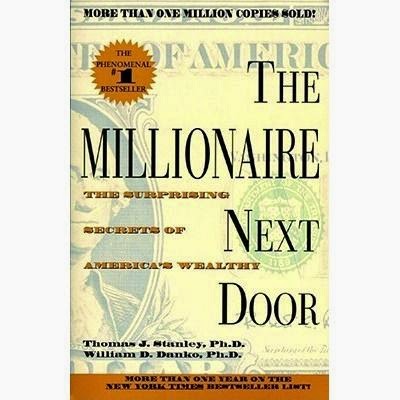
A few years back I bought and read a book written by Professors William Danko and Thomas Stanley entitled, The Millionaire Next Door: Surprising Secrets of America’s Wealthy. I can safely say, I have never read a better researched and written personal finance book. It just opens your eyes to the realities of wealth building. The truth is that, people who try hard to look and act rich are nowhere close to being rich. They may be earning extremely high incomes which translate to anything but wealth. The inflated lifestyle that is meant to be a show off and "proof" that one is wealthy is nothing but a cheap showoff.

1. Lifestyle inflation
A million rands in one person's hand stretches further than a million rands in the next person. Of course a lot of people are chasing the next big job, a promotion or higher salary. The irony is that, when they do get the higher income they were chasing after, it never translates to wealth. The reason being that, people want to act rich too soon without acquiring wealth. A new high paying job gets poverty stuck people bigger cars, bigger homes, expensive clothes and higher levels of debt. This is refereed to as lifestyle inflation. Your high income will never translate to wealth if you are keeping up with the Joneses.

2. Living above your means
The rich are not living within their means, responsible middle class lives within their means. The rich live below their means. Living on 90 percent of your income won't cut it. You will never make the time with 10% savings rate. The wealthy continuously build and maintain their wealth living on a fraction of their income. I have a friend who lives on 25% of her income. That is a true story. Always bear in mind that, the most important aspect of building wealth is TIME. The sooner you start the quicker you reach the finish line.

3. Knowing the balance sheet
I know it may look like a joke but 100% of the people whose finances I worked on didn't have a clue how much the interest rate they pay on any of their debts is. A huge chunk of them did not know how much their total debt is. Most of them did not know how much they spend every month and on what. This is the most miserable fact of all. You will never conquer what you do not know. I am forever startled by how common it is for intelligent people to choose to live in the dark when it comes to their finances. The rich know the details of their net worth and the amount by which it is growing and shrinking.

4. Setting goals and striving to achieve them
The wealthy are very much focused whilst the not so rich are moving without clear direction. I've had years where my goal was simply to boost our net worth by a million rands or close. That doesn't require a million rands in income but a million rands strategy. When you set goals and run after them, you tend to achieve a lot more than when you have no set strategy. This life requires thorough planning.

5. Buying experiences vs things
The wealthy often go on reasonably priced outings, camps, holidays, gaming trips, etc. Contrary to what most believe, the rich don't splash on fancy cars, expensive stuff and costly activities. They often buy used cars that they comfortably afford to buy with no debt. The most popular car make for dollar millionaires is said to be a Toyota. Imagine that! The "not so rich" often show off in fancy German cars and boutique clothes they cannot afford. They would go through 100% of their income and further subsidise it with a credit card. It is ironic. They choose materialism over experiences like travel and activities that make the world a better place.

6. The earlier the better
Most of those who make it have started investing very early in their lives. They are beneficiaries of compound interest. Starting later robs you of this benefit. I am planning to write an article on time value of money soon. But this demonstration will suffice for now:

Scenario1.
Age of investor: 25 until 45 (20 years)
Monthly investment : R5,000
Interest (ETF) :20%
Total amount invested : R1,200,000
Balance at the end of an investment term : R15,800,000

Scenario 2.
Age of investor: 35 until 45 (10 years)
Monthly investment : R10,000
Interest (ETF) :20%
Total amount invested : R1,200,000
Balance at the end of an investment term : R3,820,000

Take note that the amount invested is the same. The longer you wait to start, the higher the amount of money you need to invest.

7. Materialism never equates to happiness
Need I say more? The most unhappy people in this world are the materialistic people, regardless of their income levels. These are the people who want to be seen as higher achievers without being any of that. They will spend millions to give a false impression of what and who they are.

 The rich are generally financially independent. They have better control of their time. Think about the 45 year old in scenario 1 above. With R15M, you are good to go. The materialistic individual is not even in scenario 2.

You too can join the rich. Start today.

24 Nov 2014

2015 PROJECT PLAN 1

I took a decision to document the projects I plan on undertaking in 2015 to build on my 2015 goals. The first one in my mind is the trial furnished letting.
I know a few bloggers who let small apartments or rooms in their homes and listing them at AirBNB. It is usually for short term stay from a few days to a week. I am warming up to the idea of a furnished rental. We've always loved staying in self catering apartments when we go for short holidays. However, with my lazy approach in mind, I would skip the daily rental option and go for a monthly rental. A more hands off approach suits my passive income approach more. This is my 2015 project plan 1 of probably 5. I would target to implement this particular one by mid-year.

2015 project plan 1 - the estate nature reserve
One of my properties which is a perfect fit for this kind of a project is in a gated residential estate. The picture above was taken from the exclusive nature reserve within the estate. Furnished, this unit could bring in double its current monthly rental. I would love to get a few years tenancy contract like the ones entered into with corporate clients. Especially if we assume that my tenant will be pretty decent and not break my furniture or scratch stuff. This unit pretty much ticks all the boxes for an up market furnished rental. Below is a list of what could attract my target tenant.

1. Security
The main selling point for this particular unit is security. Whilst I got over living in such an exaggerated security place, my tenants seem to love it. Security is costly but it pays you back. I've had the current family occupy the unit for more than three years. People feel safe in estates with controlled entry and exit.

2. Look and Feel

It doesn't matter how glamorous your place is, high paying tenants want to be in spectacular surroundings. Like your agent would say "LOCATION, LOCATION, LOCATION". Apart from the location, your furniture has to be of quality with a nicely landscaped garden. Most ridiculous but true is that, the neighbour has to also maintain the same look and feel standards. Everyone is forced to keep up with the Joneses in these estates. The whole estate is run like a well oiled machine. Roads for cars, walkways, bicycle and baby stroller pavements should be at their best look all the time. These are things you look for when shopping for an up market rental property.

2015 project plan 1 - the estate dam
In this particular estate, there is a nature reserve with a dam, nature breeding spots and lots of various water and land breeds of animals. This offers a tranquil walking, jogging and cycling trail. It is also a requirement that you keep your home neat and presentable at all times. Forcing your tenant's neighbours to be an ideal match for them. 

3. Lifestyle

The place is peaceful and relatively safe. One may jog, walk, cycle or picnic in the dam area with friends and family on weekends. This type of a tenant loves to have those options, even when they never use them. Noise levels are also controlled. That is a part of the controlled estate lifestyle that does not suit me and my family. Complaints I received over the past few years are that of my tenants' dog barking at night.
furnished property letting project
 4. Convenience
School buses collect school kids at the estate gate to local schools. There is a few well recommended private schools in the area. Wi-Fi is now being organised to be available throughout the estate. It is obviously cheaper to pay the telecoms service provider as a collective than as an individual.

All of the above sell a furnished property to the tenant. The subject unit is also a good size with 4 bedrooms and 3 living areas. That is a great size for an expatriate family on a contract employee with school going children. A good maintenance free garden comes with its own garden services. It is exciting just thinking about this project.

That is one of my projects for 2015. Do you have plans for the coming year?

21 Nov 2014

CAR FUND IDEA

Welcome to new readers of this humble blog. I hope you enjoy it and learn a trick or two. Do ask questions if you so wish. Those who have been with us for the past few years may recall that I am fond of those various savings pockets. I am a true fan of the envelope system without the actual envelopes... story for another day.

I shared my car fund idea here about two years ago. I know, I also mentioned how a car is not an investment  earlier in the same year. But really, I cant change the fact that most of us love being behind shiny wheels with sheer comfort. Whilst I thought and still think its a bad idea to pay a car installment, a colleague shared how she finances her cars with me the other day. I was totally WOWED by it, and because I can never keep such secrets, I'm sharing that with you today.

She gave me a lift in her A Class Mercedes Benz for two days. I probably never mentioned how much I love a Merc. Yeah, I do! So after a small irritating chit-chat about work and its politics I managed to gather strength to pry on her personal finance issues. Have you noticed just how nosy I am? I am a curious soul and generally interested in people's lives. BUT... and a big BUT I do it out of love. This is why my colleague was open to giving me this tiny detail of her finances.

Car Fund Idea : Real life Story
Firstly, my colleague is approaching her retirement (above 55). She changes her cars every 4 to 6 years. She is definitely not like me. My car is seven years old going for 8 in the new year. I still smell the dealership in it...JOKING. My colleague doesn't like an old car, which is not a bad idea, given her amazing strategy.

She uses a very high deposit for each car buy. Her installments are therefore negligible. I love that. But it does not end there. She pays until she owes nothing on her car, like her current Mercedes Benz. She then drives it for another two years after the last payment, and continues paying the same amount into a separate savings or investment account. For interest sake, lets say her car installment is R5000 per month, though I suspect its way less. This is where I make a practical example for us to unpack her strategy.

Car Fund Idea Example 1
Monthly Deposit R5000
Interest 9.5%
Number of Years 2

In two years my colleague will be having more than R131,500 in her money market account. Let us go crazy and assume my colleague used Satrix Indi to save this amount for the past two years. The performance has been 32.72% over the past three years. This is getting exciting.

Car Fund Idea Example 2
Monthly Deposit R5000
Interest 32.72%
Number of Years 2
See how this ETF would have given my colleague more than R166,300 in the two years from the R120,000 she slowly invested over 24 months. How is that for a new car deposit??? Before you forget, she is also trading her old car in for some R100,000. That makes R266.000 deposit. Lets now go into a calculation of how much my colleague ends up paying monthly for her Mercedes Benz.

Cost of the car R400,000
Deposit plus Trade in value R266,000
Total finance required R135,140
Interest rate 9.25% (current prime rate 2014 November)
Term of loan 4 years
Initiation fee (Once off) R1140
Monthly service fee R57
Monthly installment R3450

Phew!!! I know what you are thinking. There it is fellow South Africans. I love playing around with these figures. Hope you do too. There is absolutely no reason for you to pay more for a car of your dreams. Just remember that you can do even better by investing the R5000 every month, just for retirement's sake.

How do you finance your own luxuries?
Blessed weekend!

20 Nov 2014

FEAR OF TAKING RISKS

What a hectic week I am having. I haven't even had time to garden. And in this rain, I would have loved to plant a rose bush or two. I decided to go ahead and squeeze in a post on the common fear of taking risks and why risk is part of an investor's life.
Risk is definitely scary but exaggerated amounts of fear can be paralysing. Everyone needs to have a system to manage their fears, in personal finance and all areas of one's life. We just have to realise that being alive in itself is a risk and its never going to get any better. The investing space requires one to have some appetite for risk. The extremely risk averse take longer to build wealth. Having said that, not all risks are worth taking.

A fear of taking risks
Expected Returns
I am a very cautious person, but I take a huge amount of risk when my sums look good. I base my decisions on expected returns with each project or investment I take on. I go through the same calculation every time I acquire a property. Each acquisition should have potential to work hard to up my net worth and monthly income. I naturally start by calculating the expected rate of return on the new acquisition to justify the purchase. Everything is based on assumptions. An element of risk is there but I refuse to let it paralyse me. In the case of shares, I focus on the expected future growth of the company whose units I'm buying; with property, I look at plans for the location of the property,  and the basket of stocks in the ETF I'm buying, etc. The decision has to be well informed to reduce the risk and fear thereof.
Risk Assessment
Having looked at the expected return on my investment, I look at the potential risks. Even with a high expected return a high risk investment with may not be worth my time and money. A lot of high return scams are making rounds targeting the desperate individuals. If an "investment" sounds too good to be true, chances are, it is too good to be true. My sister once told me of an investment scheme by the name "defencex". I never needed to even check how legitimate tis investment was. My sister gave me the figures which added up to 60% of interest in one month. This was obviously one of a kind. I advised my sister to run as fast as she could from it. Then more similar scams appeared. An "investment" that promises returns that high raises a red flag immediately. An investment that is too volatile in terms of its performance trend is also high risk. Looking at what is likely to happen reduces ones fear of taking risks.
Diversification
The best lesson I learnt earlier on in life is having every area of my life diversified. This is from my career, relationships and finances. I really have haphazard qualifications that are not related to each other. Before we even look at my my curious nature, I easily get bored with routine. Similarly, my friends are far from being replicas of each other. I practice the same in my finances. I have tried to have diversified sources of income. I find it very dangerous to rely on only one source of income.
A low rental month is boosted by the dividend here and and some interest there. The goal is to manage the risk which is in your control in order to reduce the impact of the market risk which is not in your control. Even in my stock portfolio, I try to be well diversified in different sectors. When things go sour in the financial sector, I might be doing well in the telecoms.

Diversify your life to avoid the crippling fear of taking risks.

13 Nov 2014

DECEASED PROPERTY TRANSACTION UPDATE

My deceased estate property transaction journey was very long and tedious. Remember how I gave up on this purchase last year in this post... After a long conversation with the estate agent and the lawyers I thought I should just hang in there. The wait was not as painful because I had no monthly costs. Did I mention that the heirs were so desperate to get rid of this house that they were selling for below 50 percent of what I was told it is worth. It needed a lot of cosmetic work though. I would say R50,000 to R100,000 worth of work. For more on what I looked at to see if this transaction is worth it, go to the article on buying rental property

The transaction took exactly 1 year without a day longer. It was too strange. The bank had lost the Title Deed, which delayed this further. On the 12th November last year, all was done and the property was registered. I am not the most patient person, but I must say, I can do this again. Lawyers informed me that it was registered a year back.

12 November 2013

TRANSFER: SELLER NAME/ BUYER NAME
ERF, TOWN

We write to confirm that the registration of the above transaction took place out of the Deeds Office Cape Town on the 12th of November 2013.

We anticipate receipt of your Title Deed in approximately 3 months time.

In the meantime kindly arrange to be registered with the Amathole and Amahlathi Municipalities as a ratepayer and service consumer

Enclosed is our statement of account which we trust you will find in order.

Yours faithfully,
Lawyer

I was never told to do my own municipality registration before. I was in shock. Anyway this was my first small town purchase. It is much easier in the Metropolitan areas, where I usually buy.

Attached to this letter was my statement of account with costs of about 4.44% of the property purchase price. I just want you to know what the costs for this transaction were. I removed the amounts, I don't know why...SIGH!

STATEMENT OF ACCOUNT

RE: TRANSFER: SELLER NAME/ BUYER NAME
ERF, TOWN

To purchase price Erf xxx   
To attending instruction for transfer, drawing all documents & attending to local work etc
To Vat
To paid Amahlathi Municipality for Clearance Certificates
To pro rata share rates ito Deed of Sale from 12/11/2013 to 30/06/2014
To paid Amathole Municipality for Clearance Certificate
To Fica verification
To Vat
To Cape Town conveyancers charges:  Lodgement and registration of transfer 
To Deeds Office search fee
To Vat 
To document generation fee
To Vat
To our postage, petties and bank charges
To Vat 
By paid iro purchase price and costs       
By interest 

This was all listed in my statement. Some amounts are very small and some listed in triples. Like I said, it was a very low 4.5% including all costs. I would do this again for sure.

What Next:
We are repairing the ills in the house. A very slow process. I'll be constructing 3 or 4 attached small cottages in this 800+ square metre land. Rental is low but overall returns are higher than I earn in my existing units. It is a pilot project for me. I'll report to you as soon as I start. I actually can not wait.

Remember to ask me any question, I love your comments, criticism and questions my friends.